Carlo Berger · 6 October 2026
Mapping crawler behavior shifts through extended log file analysis in multi-domain setups
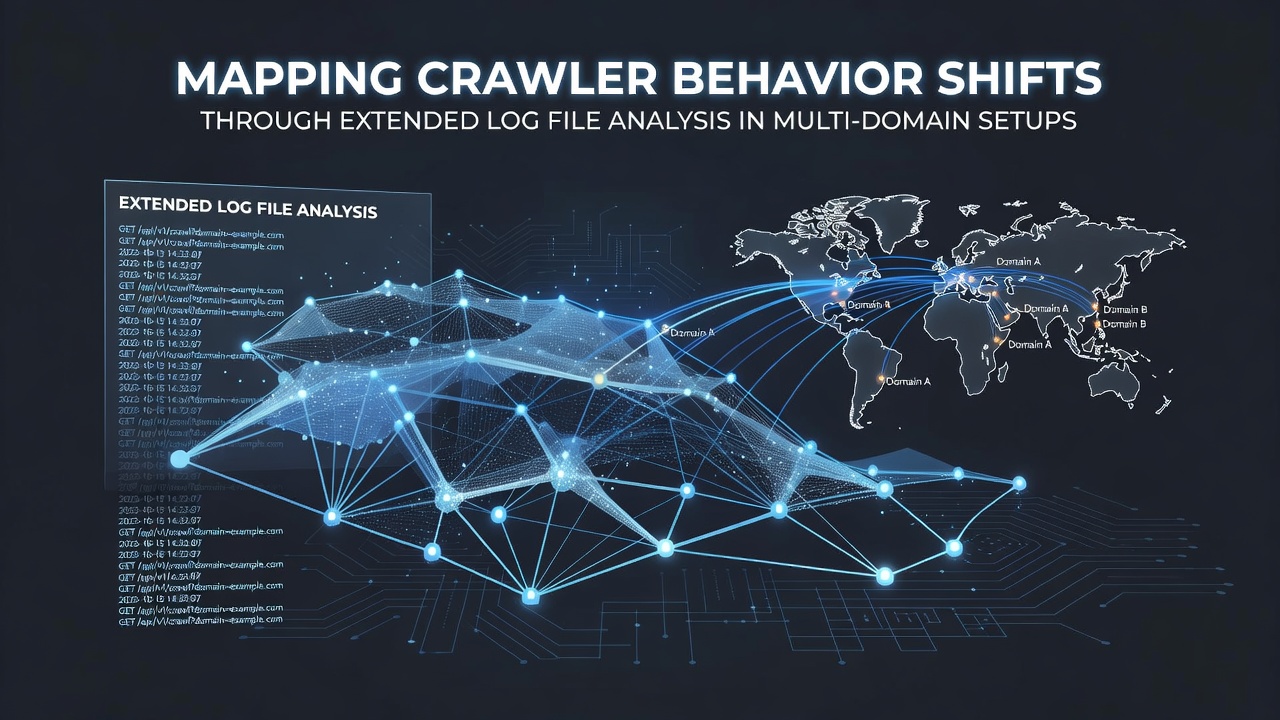
Extended log file analysis provides a structured approach for tracking how search engine crawlers navigate complex website architectures that span several domains at once. Organizations managing large digital properties often maintain separate domains for regional content, product lines, or service tiers, and each domain generates its own server logs that record requests, response codes, and user-agent strings. When these logs are aggregated over months rather than days, patterns emerge that reveal changes in crawl frequency, page priority, and resource allocation across the entire network of sites.
Log aggregation across domains
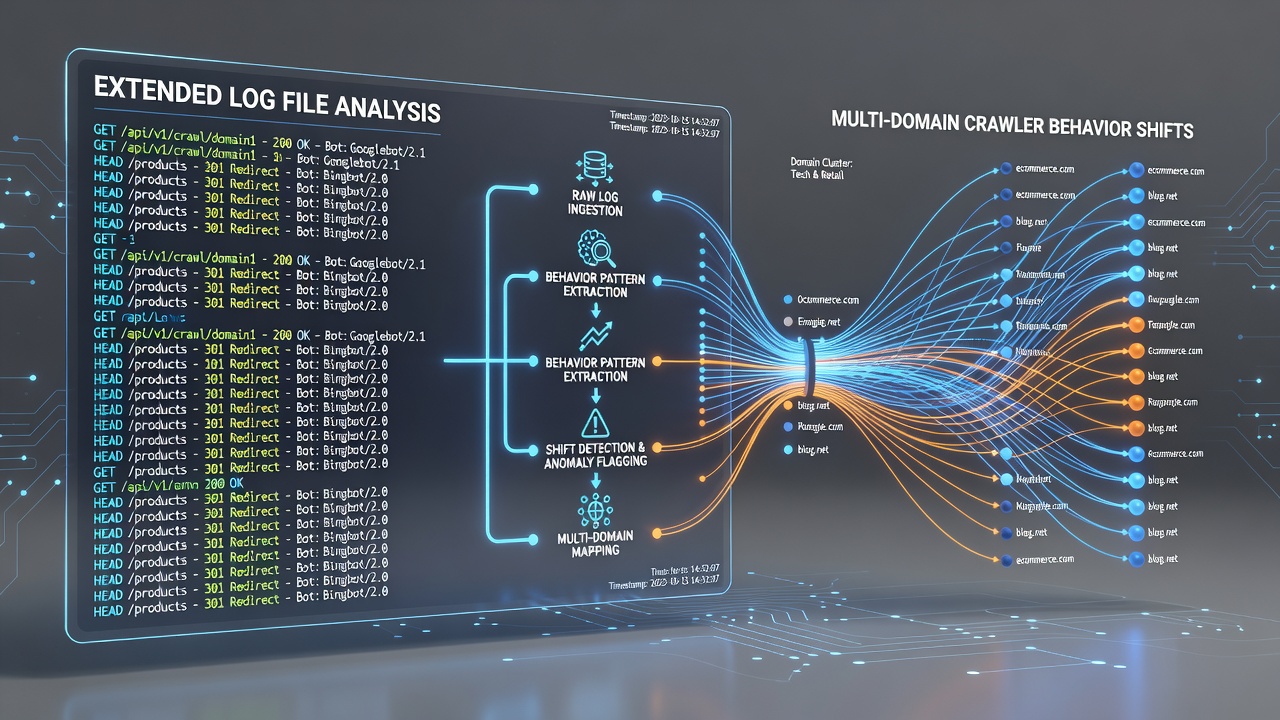
Combining logs from primary, regional, and subdomain servers requires consistent timestamp normalization and standardized field extraction so that crawler sessions can be reconstructed without duplication. Analysts typically parse fields such as IP address, request path, status code, and bytes transferred, then merge them into a unified dataset that preserves the originating domain for each entry. This merged dataset allows researchers to compare crawl depth on one domain against crawl breadth on another during the same time window, revealing whether crawlers treat the domains as a single entity or as distinct properties.
Data collected through October 2026 shows that multi-domain environments experienced measurable shifts in crawler distribution following core algorithm updates released earlier that year. Logs from enterprise setups indicated that certain domains received increased visit rates while others saw reduced frequency, even when content freshness remained constant across the portfolio.
Identifying behavioral shifts
Extended analysis periods make it possible to distinguish between temporary fluctuations and sustained changes in crawler behavior. Short-term spikes often correspond to news events or promotional campaigns, whereas longer-term trends point to adjustments in how search engines evaluate site authority, internal linking structures, or technical signals such as sitemap updates. Observers note that crawlers may begin favoring certain domains for deeper indexing while limiting exploration of others, a pattern visible only when logs are examined across quarters rather than single weeks.
Researchers have applied time-series clustering to these datasets, grouping similar crawl sequences and tracking how cluster membership evolves. One study revealed that domains sharing the same root brand sometimes received divergent crawl treatments after structural changes were introduced on only one of the sites, suggesting that crawlers evaluate each domain's signals independently despite shared ownership.
Technical considerations in multi-domain tracking
Accurate mapping requires careful handling of shared resources such as content delivery networks and shared authentication systems that can mask the true origin of requests. Analysts filter out static asset requests and focus on HTML responses to isolate content discovery patterns, then correlate these with changes in robots.txt directives or canonical tags that affect how crawlers interpret duplicate content across domains. Tools that support distributed log processing become essential when daily volumes exceed several million entries, because sequential parsing alone cannot keep pace with continuous data streams.
According to findings from a University of Toronto research project on web-scale data collection, organizations that maintained unified log schemas across domains achieved more reliable detection of crawl priority shifts than those relying on separate analytics platforms. The project also documented how differences in server configuration can introduce noise that obscures genuine behavioral changes unless preprocessing steps standardize variable formats beforehand.
Practical applications of the mapped data
Once shifts are identified, teams can adjust internal linking, update XML sitemaps, or reallocate crawl budget through targeted improvements in page speed and mobile responsiveness. Figures from industry reports compiled by the Australian Competition and Consumer Commission indicate that sites demonstrating consistent technical health across multiple domains retained higher overall indexing rates during periods of algorithmic adjustment. These adjustments often occur gradually, so extended log monitoring provides the necessary lead time to implement changes before visibility metrics decline.
Case examples drawn from mid-sized e-commerce operations illustrate how one domain within a portfolio absorbed increased crawler attention after structural consolidation on a sister site, even though the content volume on the receiving domain stayed the same. Such transfers highlight the interconnected nature of crawl allocation decisions and underscore the value of viewing the entire domain network as a single analytical unit.
Conclusion
Extended log file analysis supplies concrete evidence of how crawler behavior evolves across multi-domain setups, turning raw request data into actionable intelligence about indexing priorities and resource distribution. Organizations that implement systematic aggregation and longitudinal review gain visibility into patterns that shorter observation windows cannot capture. As search engine algorithms continue to refine their evaluation criteria, the ability to map these shifts through sustained log examination remains a core component of technical site management.